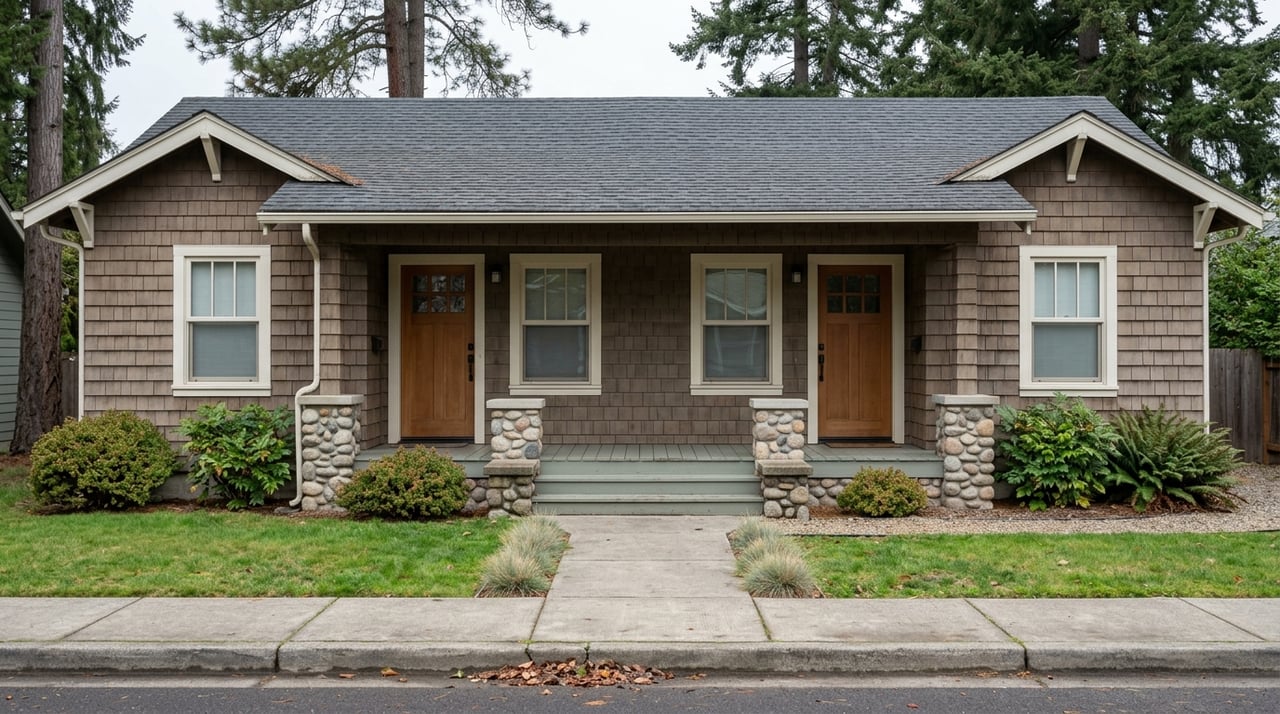
Choosing A Dunsmuir Home Style That Fits Your Life
June 4, 2026
June 4, 2026
If you picture your next home in Dunsmuir, chances are you are not imagining a giant new subdivision or a cookie-cutter floor plan. You are probably thinking about character, a manageable home size, and a slower mountain-town pace that feels connected to the outdoors. That is exactly why choosing the right home style matters here. When you understand how Dunsmuir’s housing stock, local rules, and lifestyle fit together, it becomes much easier to focus your search. Let’s dive in.
Dunsmuir is a small, compact mountain town with about 1,407 residents in roughly 1.6 square miles. The housing mix is shaped by that scale, with 1,091 housing units and about 81% of them in single-unit structures. In plain terms, that means your best options will usually be detached homes, often with older architecture and smaller footprints.
The local housing picture also leans historic. The city’s 2024 draft housing element says 42% of housing units were built in 1939 or earlier, and most of the housing stock is made up of two- and three-bedroom homes. If you are looking in Dunsmuir, you are often choosing between charm, flexibility, and convenience rather than chasing maximum square footage.
The town’s setting also shapes what buyers want. Dunsmuir is known as a small alpine town with a trout stream through town and no traffic lights. That helps explain why many buyers focus on walkability, river access, and a strong sense of place when narrowing down home styles.
For most buyers, the shortlist in Dunsmuir comes down to four practical options. Each one can work well, but the right fit depends on how you want to live.
If you love older homes with personality, this may be your best match. Dunsmuir’s history as a railroad town, along with rebuilding after the 1903 and 1924 fires, created distinct architectural eras across town. That gives many streets a historic feel that is hard to replicate in newer communities.
These homes usually appeal to buyers who care more about charm and location than oversized rooms or highly standardized layouts. You may find vintage details, compact floor plans, and a stronger connection to the town’s past. For downsizers, second-home buyers, or anyone who wants a home with a real sense of place, this category is often the most appealing.
That said, older homes call for careful due diligence. Because so much of Dunsmuir’s housing stock is older, it is wise to pay close attention to inspections, major systems, roof condition, and renovation budgeting.
A compact detached home is often the easiest way to match Dunsmuir’s lifestyle. Since single-unit structures dominate the local housing profile, this is the most common product type you are likely to see. These homes can be a strong fit if you want a simple setup, practical living space, and a manageable property in town.
This option works especially well if you want the benefits of a detached home without taking on more house than you need. Many buyers moving to Dunsmuir are drawn to exactly that balance. You get privacy and independence, but still within a market that tends to favor smaller-scale living.
Compact single-family homes can also be a smart choice if you want to stay flexible. If your priorities may change over time, starting with a detached home often gives you more options than a highly specific property type.
If flexibility matters, an ADU-capable property deserves a close look. Dunsmuir permits accessory dwelling units under city standards, which can make a modest single-family home more useful for guests, aging parents, or long-term renters if the lot and layout support it.
This style is less about what the home is today and more about what it could become. A home with the right lot, access, and layout may give you room to adapt as your needs change. That can be especially helpful if you are planning for multigenerational living or want extra space with a separate function.
Still, the intended use matters. In Dunsmuir, ADUs and junior ADUs cannot be used as short-term rentals. If income is part of your plan, make sure you are evaluating the property based on city code, not just a listing’s marketing language.
This option can make sense if you want income potential or a more flexible ownership model. Dunsmuir’s zoning code includes several residential and mixed-use districts, and the R-3 district explicitly allows duplex residential and multifamily residential uses. That means duplexes, small apartment buildings, and house-hack style properties belong on the radar for the right buyer.
These properties may work well if you want to offset carrying costs, create space for extended household needs, or hold a property with multiple uses over time. They can offer utility that goes beyond a standard detached home. In a small market, that kind of flexibility can be a real advantage.
Inventory is the catch. Because single-unit homes make up most of Dunsmuir’s housing stock, small multifamily properties are likely to be a smaller share of what comes available. If this is your top priority, expect a more selective search.
The best Dunsmuir home is not always the biggest or newest one. It is the one that supports how you actually want to live in a compact mountain town.
If you are moving to Dunsmuir because you want a historic feel, walkable streets, and a home that reflects the town’s story, a bungalow or cottage may be the right fit. These homes often offer the strongest sense of identity. They tend to suit buyers who value atmosphere and everyday charm over a more standardized layout.
If you want a comfortable full-time home or a second home with a more straightforward setup, a compact single-family home may be your best option. This can be a practical middle ground for buyers who want detached living without stretching into more maintenance than they want to manage.
If you are thinking ahead about guests, long-term rental space, or room for extended family, an ADU-capable property could be the smartest choice. This kind of property can give you more options later, even if you do not need them on day one.
If your goal includes rental income or a property with multiple living setups, duplexes and small multifamily homes deserve attention. Just remember that flexibility only helps if the zoning and local rules support your plan.
Dunsmuir’s median owner-occupied home value is about $279,000, which is below the county and state figures shown in the local housing profile. For many buyers, that creates a relative value proposition. You may be able to access a distinctive mountain-town setting at a lower price point than other markets, especially if you are comfortable with older housing.
That does not mean every home is low-maintenance or move-in perfect. Older homes can bring repair or update needs, and those costs should be part of your budget from the start. A lower entry price can be attractive, but you will want to pair that with realistic planning around condition and improvements.
In Dunsmuir, home style is not only about looks. It can also affect what changes you can make after closing.
The Dunsmuir Historic Commercial District covers about four blocks around the historic commercial core. City code says material changes to historic resources can include exterior paint color, surface texture, landscaping changes, awnings, fences, and other visible exterior elements.
The city also has a 300-foot historic-district buffer zone where certain changes are referred for historic review. If you are drawn to a historic home or a home near that core area, it is smart to ask early about permitting and approval requirements. That way, your renovation plans line up with local process from the beginning.
If you are buying with income in mind, pay close attention to Dunsmuir’s short-term rental rules. The city requires annual registration and inspections for short-term rentals. It also limits how many certificates may be issued to one owner in certain districts, and ADUs and JADUs cannot be used as short-term rentals.
This is an area where small details matter. Before you count on a property to support a certain use, confirm that the layout, zoning, and city rules actually match your plan.
If you are trying to make a practical decision, start by asking yourself a few simple questions:
In most cases, your answer will point you toward one of the four main Dunsmuir archetypes: historic bungalow or cottage, compact detached home, ADU-capable lot, or duplex and small multifamily property. Once you know which lane fits your goals, your search becomes much clearer.
Dunsmuir is a place where lifestyle and housing style are closely connected. The homes here tend to reward buyers who appreciate character, smaller-scale living, and a strong sense of place. If you want help sorting through which type of property fits your goals best, Krista Cartwright offers local, high-touch guidance rooted in years of experience across Siskiyou County.
Stay up to date on the latest real estate trends.
More than buying and selling, partnering with Krista means having a trusted advocate who puts your needs and goals first.