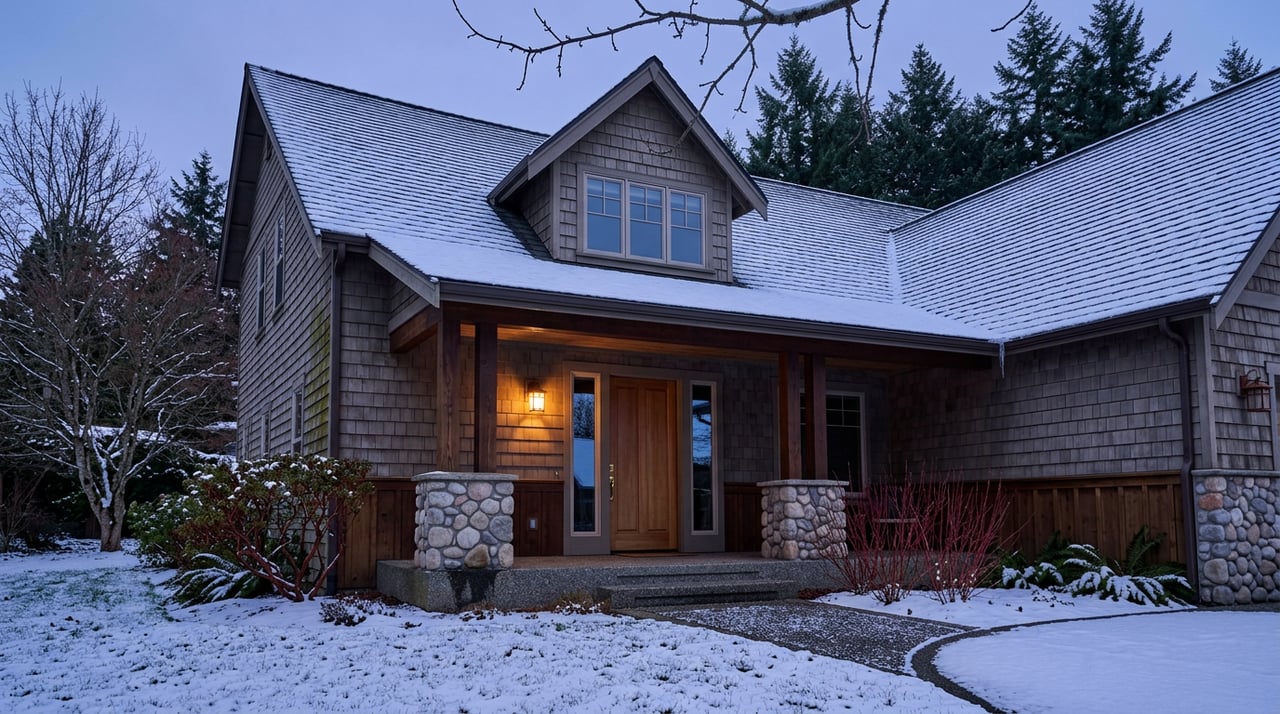
What the Ski Park's 40th Season Actually Proved About Winter in Mount Shasta
September 17, 2026
September 17, 2026
The Monday market on Castle Street is still running. Folding tables, a couple of guitar players, somebody selling the last of the season's heirloom tomatoes next to a jar of honey from a few miles up the road. It will keep running through October, same as it has since May. But if you've been in line at the post office or grabbing coffee downtown, you've probably already heard someone mention ski passes. That overlap, market still open, ski season already the topic of conversation, is where Mount Shasta actually lives every September.
Here's the part worth sitting with. Last winter, Mt. Shasta Ski Park spent months building its 40th anniversary season into an event: a free pre-season party, a New Year's Eve fireworks show, discounted midweek tickets pitched as a community gift for the milestone. Then the snow didn't cooperate, and the season closed early. The lesson isn't nostalgic. It's practical. The things the park controls, its calendar, its pricing, its passes, held up fine. The one thing it doesn't control, the snowpack, didn't. If you're deciding how to plan around skiing this year, that distinction matters more than any anniversary number.
The park was aiming for its usual mid-December opening. It missed that target. A storm finally delivered 8 to 10 inches of natural snow just before the holidays, and crews layered snowmaking on top of it to get the mountain open by December 27, according to KDRV's coverage of opening weekend. That's a real gap. A resort with six lifts and night skiing on around a dozen runs doesn't want a two-week-plus delay eating into its highest-traffic window.
The park leaned into the milestone to make up for it. A New Year's Eve celebration with fireworks kicked off the anniversary push. Starting January 7, the park offered $40 lift tickets every Wednesday, explicitly tied to the 40-year mark and pitched as a way to keep local families skiing, as reported by KDRV. Look closer at the fine print, though: the discount excluded Presidents' Weekend, the single busiest stretch of the season. That's not generosity spread evenly across the calendar. That's a resort filling its quietest weekday with a name-your-price deal while protecting full price on the one weekend everyone shows up anyway. Anniversaries make good cover stories for pricing decisions resorts would make regardless of what year it is.
Then the weather turned against the milestone entirely. A brief closure hit on February 9. A longer one followed on March 1, and this time it stuck. By mid-March, with the base area bare and no snow in the forecast, the park confirmed the 2025-26 season was over, a season that, at best, ran about ten weeks from a late December opening to an early March close, according to Unofficial Networks' reporting on the closure. For a 40th anniversary, that's a short run.
What you were actually skiing during those ten weeks, when conditions cooperated, was a genuinely built-out mountain: 38 trails across 635 skiable acres, four fixed-grip chairlifts plus two surface lifts, and enough coverage for night skiing on close to a dozen runs. The terrain has grown over time too. The Gray Butte pod opened in the 2022-23 season, and in 2024 a small Virgin Mary statue was installed at the summit of Douglas Butte, sitting on private land within the resort's boundary rather than public forest, so it didn't require the land-use review a similar addition on Forest Service ground would need. None of that changes with the snowpack. It's the infrastructure part of the story, and it's the part that was never actually in question last winter.
This season is the 41st, not the 40th, and that distinction is worth being clear-eyed about. The $40 Wednesday pricing was framed explicitly as an anniversary perk. Nothing in the park's current messaging says it's returning. If you're counting on repeating last year's midweek deal, you're planning around a promotion that may have been a one-year event, not a new standing policy.
What is confirmed for this season: season passes are already on sale, and the mechanics are worth knowing before you buy. If you held a pass or bought a lift ticket last season, your existing RFID card reloads automatically for 2026-27, no extra step needed. If you're buying new, you'll need to upload a photo before the pass activates, and pickup happens either at the ticket window once the mountain opens or at one of the park's pass pickup events beforehand, per the Mt. Shasta Ski Park's season pass page. The holiday-specific five-day pass, aimed at people skiing over their winter break, becomes available for the 2026-27 season starting November 24. Every full pass, regardless of type, also comes with three free days each at 18 partner resorts across the West, from Dodge Ridge and Bear Valley in California to Loveland in Colorado, up to 54 tickets total if you use the whole allotment.
What's not confirmed: an opening date. A recent roundup of California resort opening dates for the 2026-27 season lists Mt. Shasta Ski Park's start as "TBD," per Adventure Sports Network's tracker. That's not unusual. It's the same pattern that played out last year, when the park waited on an actual storm before locking in December 27 over its usual mid-December target. If you're the type who wants a date on the calendar before you plan a weekend, you'll likely be waiting until the snow itself makes the decision.
Right now, in mid-September, both halves of the town's year are technically open at once. The Mount Shasta Farmers' Market is still running its Monday slot from 3:30 to 6:00 p.m. downtown on Castle Street, a schedule it holds from May through October, according to the market's own site. At the same time, the conversation has already shifted uphill. Passes are for sale. The partner-resort days are worth planning trips around if you've got family in Colorado or Oregon. And the actual opening bell won't ring until the mountain says it's ready, whenever that turns out to be.
Last winter's short season isn't a reason to hold off. It's the opposite case. A pass bought in September costs the same whether the mountain opens on December 1 or January 15, and locking in the partner-resort days now means you're not scrambling in December if the local opening slips again. The parts of the season that are certain, passes, partner access, the market still open on Mondays for a few more weeks, are worth acting on now. The part that isn't certain is the one nobody controls anyway.
That's really the throughline of a milestone season that didn't go as planned. The mountain's bones, the trail count, the lift capacity, the night skiing, don't change year to year. What changes is timing, pricing, and whether the anniversary perks show up again or quietly disappear once the milestone year is over. Pay attention to what's actually confirmed rather than what was true last winter, and you'll spend less time waiting on an opening date and more time using the parts of the season already in your hands.
If you're weighing a move to be closer to all of this, the market Mondays, the pass pickup lines, a winter that runs on its own schedule no matter what the calendar says, Siskiyou Homes has spent more than 24 years watching these rhythms play out from the ground here in Mount Shasta. Reach out to schedule a free local market consultation with Krista Cartwright and get a straight answer about what a particular season, or a particular property, actually looks like once you're living it instead of reading about it.
Stay up to date on the latest real estate trends.



More than buying and selling, partnering with Krista means having a trusted advocate who puts your needs and goals first.